
How to Set Up a Podcast Studio for Your Business
It’s Easy
Podcasting is one of the few marketing channels that doesn't disappear the week after you publish it. Done properly, it builds trust, shows off your expertise, and keeps working long after the episode goes out.
The problem is most businesses either get talked into an expensive agency retainer, or buy a pile of equipment nobody on the team knows how to use. Here's how to do it properly yourself, the same process I run when I install a studio for a client.
1. Start with the room, not the gear
Before you buy a single microphone, sort the room. This is the step most businesses skip and it's the one that makes the biggest difference to how professional you actually sound.
You don't need a purpose-built studio. Most offices can be adapted:
Avoid box-shaped rooms with bare walls: glass, hard floors and parallel walls all cause echo.
Soft furnishings help: rugs, curtains, sofas, bookshelves. Anything soft breaks up sound reflections.
A smaller, furnished room usually beats a bigger, empty one
If your space is genuinely echoey, basic acoustic panels on the wall behind whoever's speaking make a bigger difference than most people expect. You don't need to treat the whole room, just the surfaces closest to the mic.
2. Decide what level of setup you actually need
Don't buy for the studio you might want in two years. Buy for the show you're making now. Broadly, there are three levels:
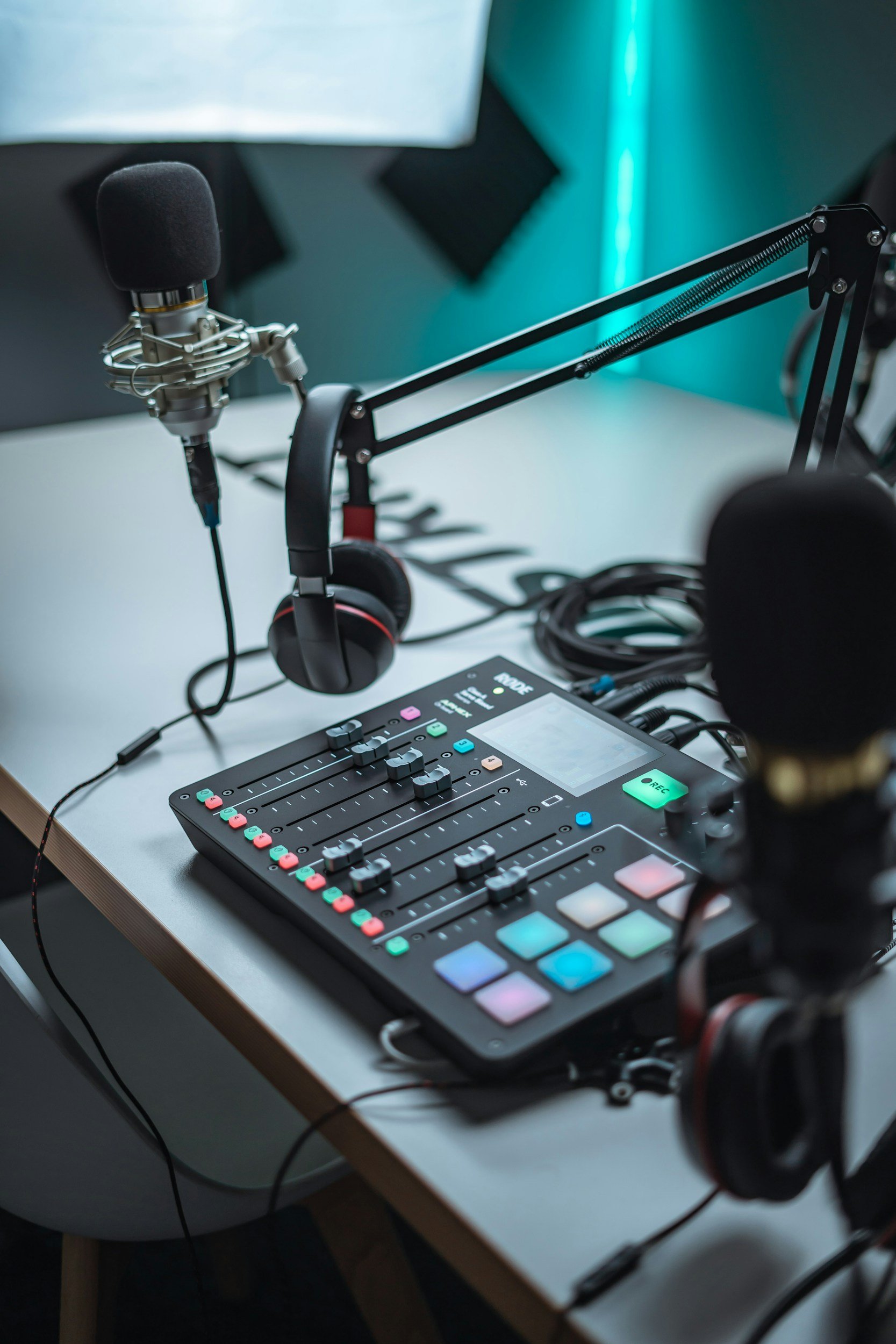
Audio only. If you're making a straightforward interview or conversation podcast with no video, you need decent microphones (one per speaker, not one shared mic), a mixer or audio interface, and headphones for everyone in the room so you can monitor levels as you go.
Audio and basic video. Same as above, plus a camera and some lighting. You don't need broadcast-grade kit here just one decent camera and a simple two or three-point lighting setup will look far more professional than most people expect.
Full multi-camera setup. If you want a proper video podcast with multiple angles you're looking at two or three cameras with a fuller lighting rig. A way to monitor everything live while you record also comes in handy.
Most businesses starting out only need the first or second tier. It’s more important to get started and build the habit and audience than it is to get everything perfect right away.
3. Get your recording workflow right before you worry about editing
This is the step that causes the most regret afterwards. If you record everyone onto a single shared track, it becomes really difficult to edit and mix later.
Record each speaker onto their own track if you possibly can. Most decent mixers and interfaces will let you do this. It means if one person's mic picks up background noise, you can fix just that track without touching anyone else's audio.
Do a proper test recording before your first real episode. Listen back on headphones, not the room speakers. Problems that are invisible in the room are often obvious on playback.
4. Train more than one person
The single biggest reason in-house podcast setups fail isn't the equipment, it's that only one person ever learns how to use it and then they go on holiday, change roles, or leave.
Whoever's involved should be confident doing three things without help:
Setting up and checking the equipment before recording
Troubleshooting the obvious problems (no audio, distorted audio, one mic too quiet)
Recording and exporting a usable file
If you want to edit in-house too, that's a separate skill worth training for deliberately, rather than assuming whoever's around will figure it out under deadline pressure.
5. Write it down
Once your setup works, document it. A simple checklist/instructional; turn this on, check this level, save the file here will save you from relearning the same lessons every time someone new gets involved. It also means the show survives a team change, which a lot of in-house podcasts don't.
Should you do this yourself, or get it installed for you?
Everything above is entirely doable in-house but people usually get stuck with the room assessment (it's hard to judge your own space objectively) and the training (it's one thing to set gear up once, another to teach a team to run it confidently without you).
That's the bit I do for businesses across Leeds and Yorkshire. I'll assess your space, install the right kit for what you're actually making, and train your team properly, for one flat fee. No retainer, no ongoing dependency on me.
If you'd rather have a straight answer on what your space and your show would actually need, get in touch — that first conversation is free.
Not sure what you need?
Already got a studio, but something's not sounding right? See Podcast Editing or Audio Repair & Restoration.
Unless you're an expert it's hard to pinpoint what's actually needed with audio. That's why I offer a free consultation. Reach out and I'll give you an honest assessment of what, if anything, you need.
No need to create a new supplier, no need to ask accounts. Simply reach out and speak directly with an audio boffin.